



TABLE OF CONTENTS
Download Template
The Ultimate Guide to Streamlined Employee Reviews, Constructive Feedback, and Professional Growth
A well-thought-out performance feedback form is an important tool for companies that want to evaluate each person’s work and help them get better. Companies can build a base for open communication and long-term success by using regular performance reviews and reliable performance review templates.
When an employee performance review form is well-structured and balanced, it often leads to more open performance discussions, more accountability, and more employee engagement at all levels. These forms are very useful for managers and employees who need a consistent way to keep track of progress and set goals that are in line with the company’s organizational goals.
Important Elements of a Template for a Performance Feedback Form
A good employee performance review template makes sure that an employee’s performance is looked at in a fair and thorough way. It should include job performance metrics, room for specific examples, and make it clear what performance expectations are during the review period. Every template should have the following important sections, along with extra data to support each point.
- Role and Responsibilities
- Give a brief overview of how well the employee did their job in relation to their job duties and goals.
- Check the job description to make sure that the feedback matches what the person actually does at work.
- Core Competencies
- Look at important skills like being able to communicate, adapt, and work well with others through team collaboration.
- Use both numbers and words to assess employee performance and gauge communication skills.
- Accomplishments and Contributions
- Give specific examples of times when the person did well or went above and beyond.
- Encourage people to use metrics to show how these successes help the organization or department reach its organizational goals.
- For example, some businesses keep track of their monthly revenue growth or project delivery rates to show real change.
- Areas for Growth and Improvement
- Instead of focusing on the person, provide constructive feedback by focusing on the behavior or outcome.
- Offer ways to improve skills or get more training for career development and career advancement.
- Development Plan and Steps to Take
- Set goals for the next review period to encourage continuous improvement.
- Give employees tasks or classes that will help them with professional growth and employee development.
- Self-Assessment for Employees
- Include a place for the employee to write down their own thoughts on their own performance, which is often done through an employee self-evaluation form.
- This method encourages honesty, meaningful feedback, and employees to get involved through self-evaluation.
- Self-assessment can also help you find out what your strengths are and what problems you might not be aware of.
When these parts are clearly spelled out on an employee evaluation form, it is easier for supervisors to give detailed feedback and for team members to see how they can change or improve.
Creating a Clear Rating System and Review Process
A consistent rating scale is needed for a performance review process to be fair. Some businesses like numbers (1–5), while others use words like “Meets Expectations” or “Exceeds Expectations.”
- Details About the Rating System
- Make sure everyone on the team, including direct reports, knows what the criteria are for each level.
- Use performance ratings to give structure to conversations without making them too formal.
- Structure of the Evaluation Form
- Make the employee review form easy to use by including clear scoring columns and comment boxes.
- Use both quantitative measures (like productivity numbers) and qualitative measures (like how well people work together).
- Schedule for Performance Appraisal
- Do performance reviews on a regular schedule to cut down on guesswork and ensure timely feedback.
- Pick the right time frame, such as once a year, halfway through the year, or every three months, based on how quickly things change in your organization.
Different Kinds of Performance Reviews
Forms for Annual and Mid-Year Reviews
An annual performance review template looks at the past 12 months and checks to see if goals were met and how well employees helped the business run. This evaluation process usually looks at yearly data to see if it is in line with strategic goals. But a lot of companies do a mid-year performance review to see how things are going. This check in the middle of the cycle makes sure that employee performance reports accurately reflect changes, allowing management to change goals if necessary. Download Template
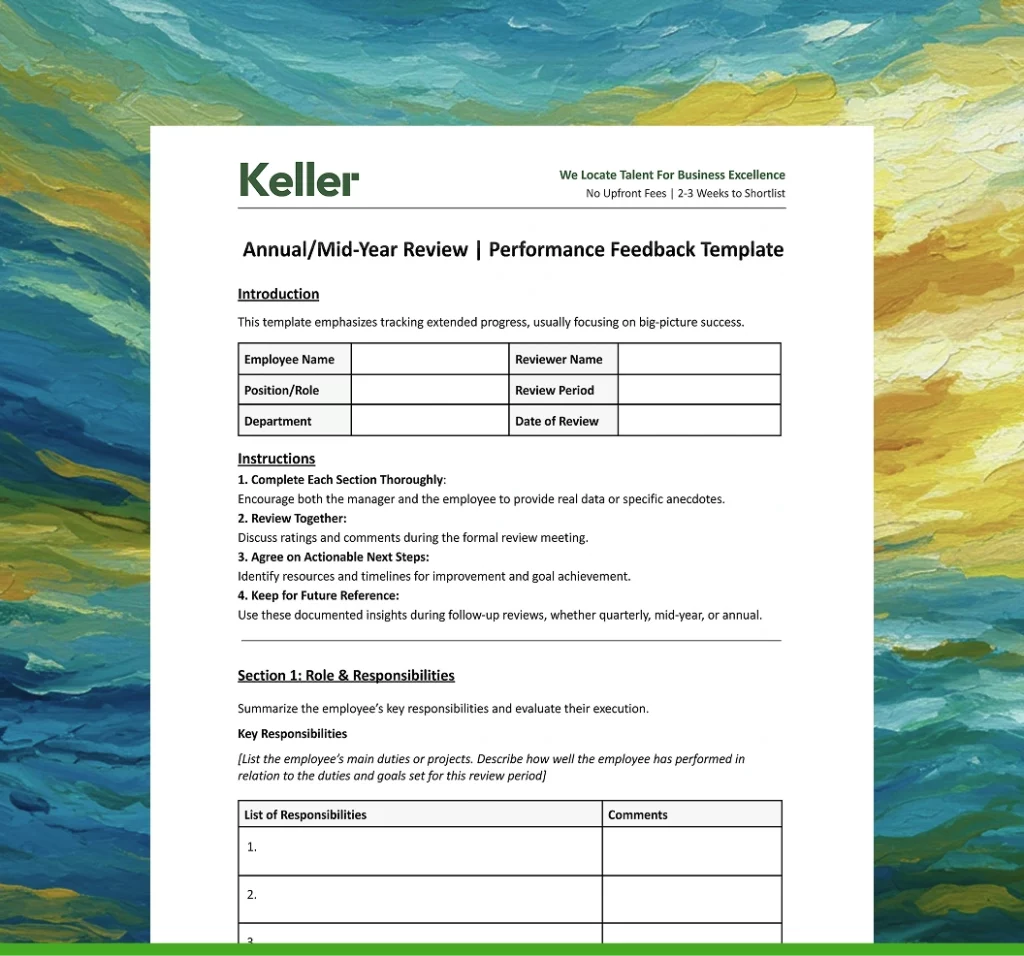
- Annual reviews look at long-term progress and usually focus on overall success.
- A midyear performance review gives managers a chance to fix things and provide manager feedback before the end of the year.
Options for Quarterly Reviews
A quarterly performance review template is often used for shorter cycles. During quarterly performance evaluations, companies find quick wins and areas that need to be changed every few months. This process of reviewing more often makes it easy to assess employees’ work performance in real time and keep managers and employees on the same page. Download Template
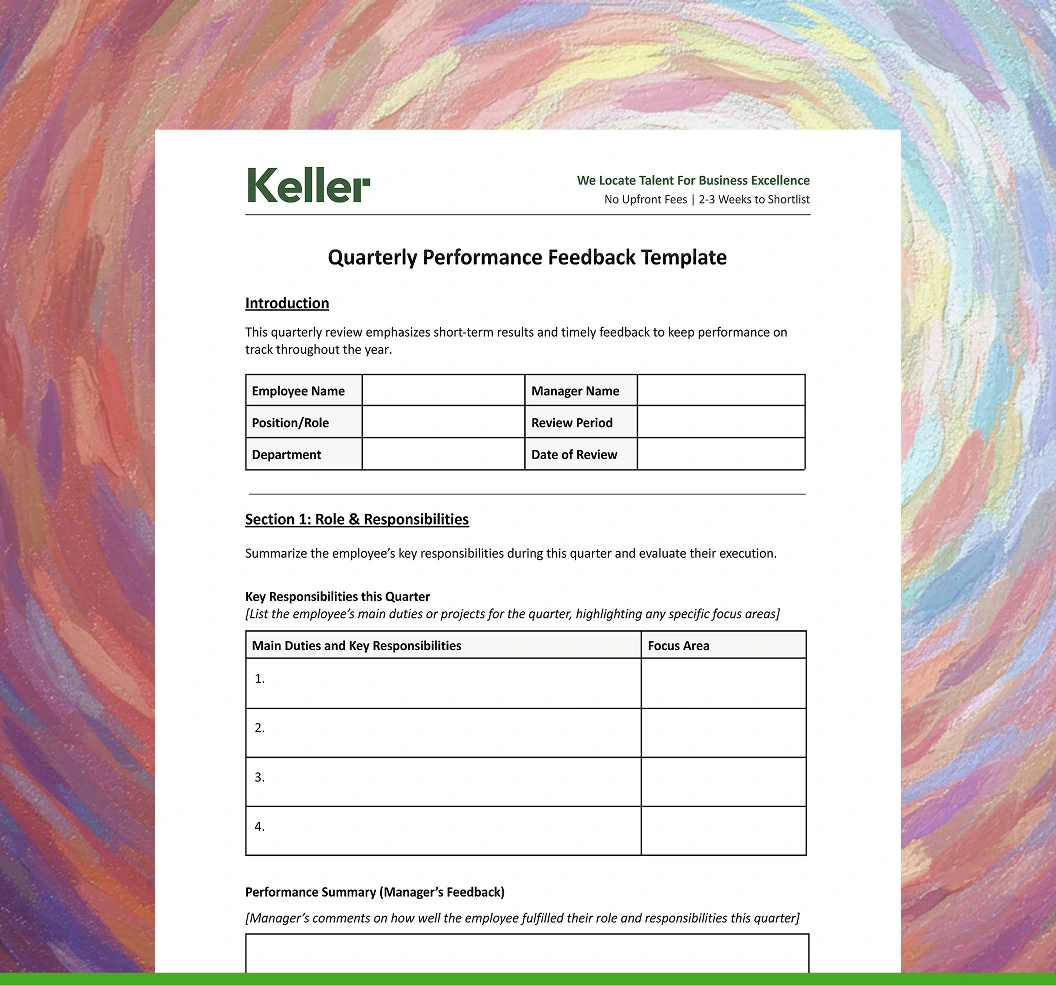
- Quarterly performance reviews may keep track of key performance indicators, such as sales figures or the rate at which projects are delivered.
- Lets employees adjust more quickly, and managers assess and step in sooner if they see signs of poor performance.
Simple Performance Review Template for Quick Feedback
A simple performance review template is great for small teams or quick check-ins. This type of simple performance review form usually has only a few sections: goals, recent successes, and problems that need to be solved right away. Even though it is short, it still leaves room for constructive criticism and sets the stage for continuous improvement. Download Template
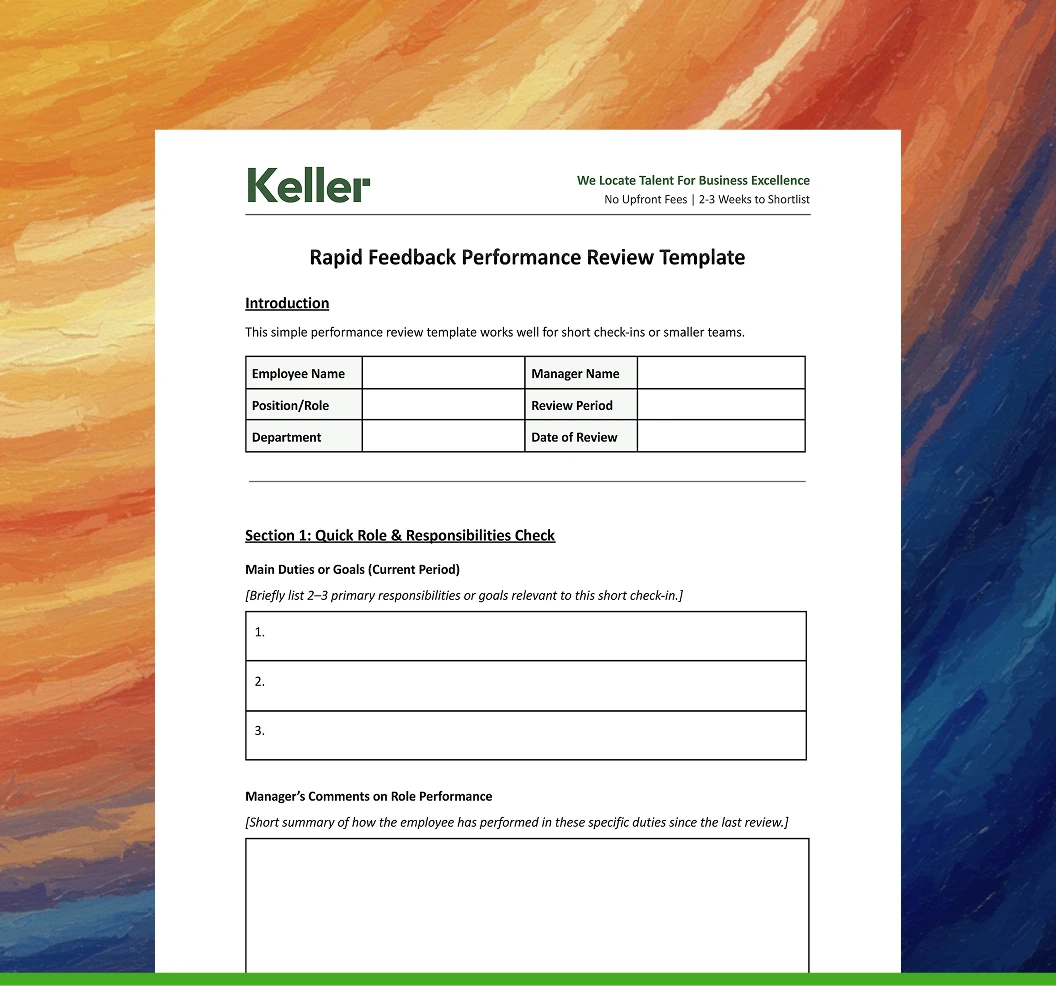
- Works great for teams that work from home or are flexible and need quick updates.
- Can be added to coaching sessions that happen every day or week.
Strategies for Constructive Feedback and Professional Development

Good employee feedback includes both positive feedback and ways to get better. Employees are often more motivated when a manager gives them focused, constructive feedback during a professional development review.
- Clarity and Respect: Make your comments clear. Instead of saying “You need to do better,” say “Your written reports would be better if their goals were clearer.”
- Action-Oriented Steps: Connect feedback to a plan of action. To move forward, suggest training or mentoring.
- Communication Skills: Make sure the conversation is respectful and open so that employees feel comfortable talking about their problems.
Giving constructive feedback in the right way helps keep professional development on track and encourages a culture of support. It also makes employee engagement stronger because they see a clear path for professional growth within the company.
Inspire Employee Growth Through Performance Reviews
Performance reviews that are well thought out are important for helping employee growth because they point out strengths and give advice on what to do next. When there is evidence and consistent feedback over several cycles, this process becomes even more powerful.
- Tracking Key Performance Indicators: Links the work of each person to the organizational goals.
- Teamwork: Getting team members to help each other through team collaboration can make the whole group more successful.
- Improve Performance: Regular performance evaluations help managers find performance problems early on so they can fix them before they get worse.
- Employee Development: Getting regular objective data, balanced feedback, and supportive conversation helps each person improve their skills through employee development.
Companies can make reviews more useful for improving employee performance by giving them chances to grow professionally, such as taking on more responsibilities or taking courses outside of work.

Best Practices for Ongoing Performance Management
Even the best performance review templates will not work if you do not have a good way to manage performance. To keep things running smoothly, think about these best practices:
- Balanced Feedback: Point out what went well with positive feedback and what needs to be better.
- Human Resources Support: Work with HR to make sure that all performance evaluations follow company rules.
- Skill Enhancement: Suggest classes, conferences, or mentors to help team members and direct reports build on their strengths.
- Next Performance Review Planning: Make sure everyone is on the same page by making it clear what performance expectations look like in the next cycle.
By regularly updating the employee evaluation form, businesses can stay flexible and adjust to changing needs. Every time you do an employee performance review, you have a chance to improve the review process, reinforce the company’s goals, and help employees grow.
Next Steps
Leaders who place a lot of importance on clear performance discussions and regular performance evaluations usually see their teams’ morale and productivity go up. The main goals of a good performance review should always be to help team members understand how far they have come, set new goals, and make sure their work is in line with the team’s organizational goals.
A good performance management system makes the feedback cycle more organized. When you finish your performance review, make sure that it is clear, fair, and open. This method will keep employees’ work performance high, and annual reviews will be more than just a formality.
Organizations create a supportive environment where people can thrive by giving detailed feedback, objective data, and two-way communication. This is good for the company in the long run because employees get better at their jobs through career development, and the company keeps getting more productive, innovative, and committed.


Latest Insights


