


TABLE OF CONTENTS
Download Template
Your Guide to Hiring Faster and Smarter
Leaders in talent acquisition all agree on one thing: speed and clarity are what get you the best candidates. When those qualities are missing, well-known brands can see top talent accept offers from other companies. A well-designed hiring manager intake form brings back order.
Recruiters and hiring managers create a single reference that guides each step of the hiring process, from the first brainstorming sessions to the signed offers, by turning an early conversation into a structured record, which many talent teams now call a recruitment intake form. Keep reading to discover why this document is important, what should be in it, and how executives can create a long-lasting, accurate form template.
Important Details
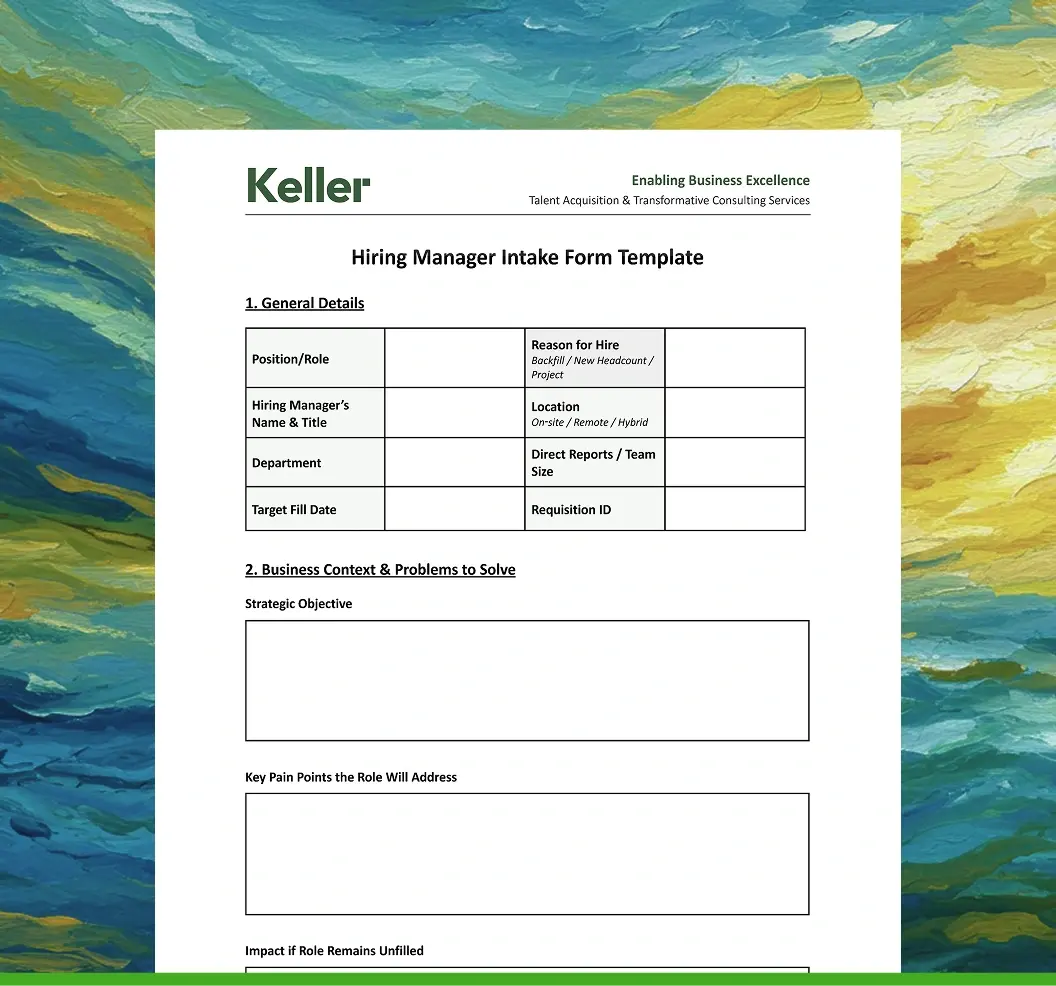
The intake form is like a flight plan for each job opening. It keeps everyone, including recruiters, hiring managers, and leaders, on the same page.
Important information that the form collects includes:
- Goals for the business
- Must‑have skills vs. skills that are nice to have
- The logistics of the interview
- Salary and sign‑off steps
What Is a Hiring Manager Intake Form?
An intake form for hiring managers is a digital questionnaire that gathers all the information the talent acquisition team needs to fill a job opening. It starts with basic information like department, cost center, and reporting line, and then it goes into more detailed background information. The intake document is private and goes into more detail than a public job description, which only lists the duties of the position. It lists the business goals behind the hire, the must haves and nice to haves, and the exact job requirements that make it easy for interviewers to assess candidates.
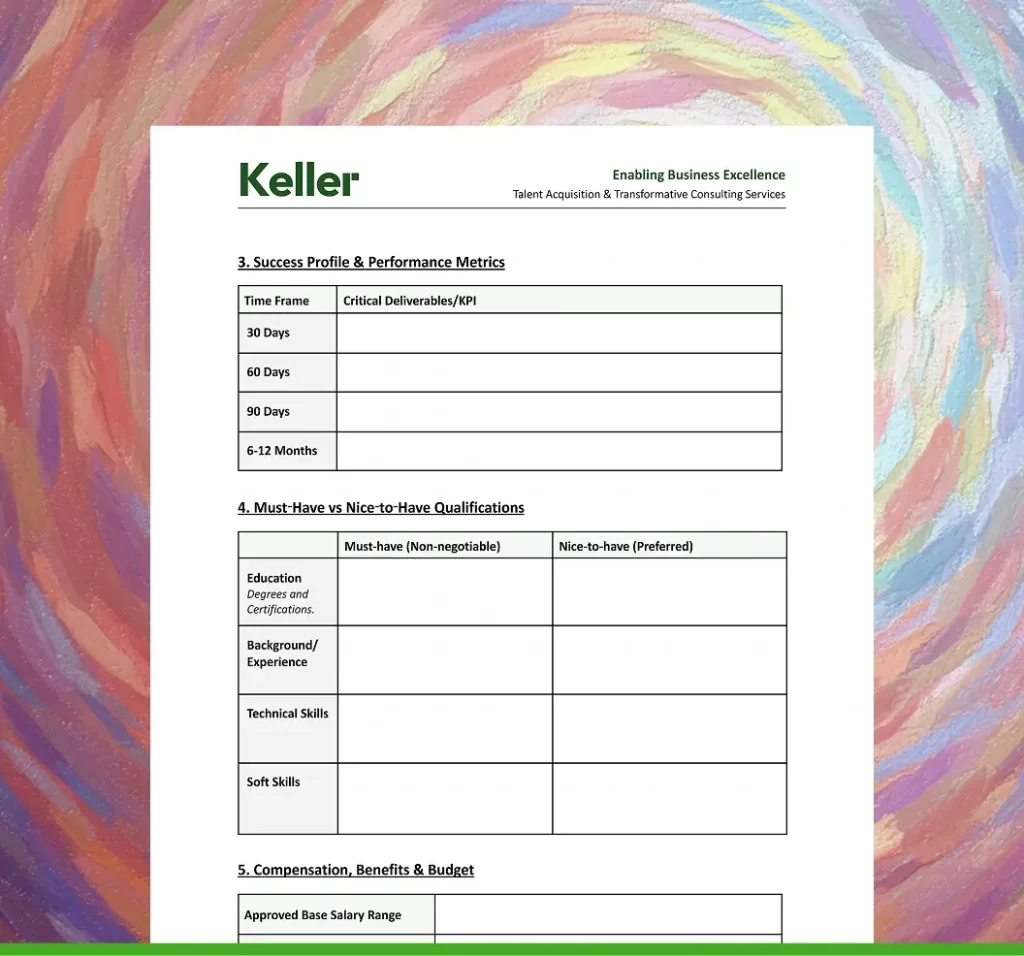
Many templates come with a short list of example questions that the recruiter will ask during the kickoff to help managers get ready. The form also lists the job title, the salary range, the interview timeline, and the people who need to sign off on a job offer. It can include private information like pay bands, succession notes, or a preferred career path for the role because it never leaves the company. When the recruiting intake form is done, recruiters know exactly what to do instead of having to guess, and hiring managers know that their needs have been heard.
How an Intake Meeting Ensures the Hiring Team is on the Same Page
An intake meeting makes the intake document real. In this short recruitment intake meeting, the recruiter, the hiring manager, and a key team member go over each field line by line. They talk about the hiring manager’s expectations, confirm the interview timeline, and leave the room on the same page about how the recruitment process should go in thirty to forty-five minutes. Gartner data shows that when teams skip this kickoff, job openings stay open for 22% longer.
Companies say that early turnover drops by 17% when the hiring team gets on the same page before they start looking for job candidates. After the meeting, everyone knows when interviews will start, which internal candidates should get a call first, and which evaluation rules will help them save time and avoid bias. The rules apply to both reviewing resumes and interviewing candidates, so the process feels the same to every potential candidate who applies and everyone on the panel.
Things That Every Intake Form Should Include
A good recruiting intake form template puts information in a consistent order so that people can quickly look it over and act. The first thing is the job title, the company’s hierarchy, and a short description of the main tasks. Next is the approved salary range, along with equity or bonus notes. After that is the split between required skills and nice-to-have skills, which can include technical skills, soft skills, and industry experience.
The template ensures that nothing important gets missed by asking if certain sourcing criteria apply, if certain internal candidates should get an early review, and who on the panel will conduct interviews. It also keeps track of a target start date, early milestones, and a place for additional comments that could help with a smooth hiring process. The form template makes sure that these fields are the same, which stops duplicate emails and keeps important data from getting lost.
Important Elements of Every Intake Form
- Job title and the order of people in the company
- A five-line job description that focuses on results
- Salaries that have been approved, plus bonuses or equity notes
- Must-haves and nice-to-haves for tools, licenses, and desired qualifications
- Preferred talent pools, which include internal candidates who are ready to step up
- Names of the interview panel and their roles in making decisions
- Start date and early project goals for the new position
- Room for the manager to add additional comments
Business Context and Success Metrics
There is a reason for every requisition, and the intake form should make that clear in simple terms. Human resources can stay on track with the hiring process by linking it to goals like making more money, getting more customers, or following the rules. Add two or three ways to measure performance and success. A promise from the new leader to help the team hire 20% more engineers in two quarters could be a sign that the recruitment strategy is working. By setting checkpoints at 30, 60, and 90 days, executives can see progress early on instead of having to deal with problems later.
Details of The Candidate Profile
Listing certificates is not enough to define the perfect candidate. The document combines desired qualifications with personality traits that fit the company culture. A short ideal candidate profile might list three core technologies, two ways of working together, and five years of industry experience. The template also has space for a statement about what the ideal candidate will achieve and how the hire will help the team reach its stretch goals. The intake form opens up the pool of potential candidates without lowering standards by encouraging openness to job candidates who meet most, but not all, of the requirements.
Salary and Approvals
Many searches are put on hold because of money problems, so the form includes the salary range in writing. It includes all the people who need to give their permission for exceptions and explains how relocation, equity, or remote work stipends will be handled as part of the employee’s total compensation. Establishing the pay and benefits early on helps recruiters make offers that get the right candidate the first time.
How to Use an Intake Form the Right Way
A productive recruitment intake meeting is like a work session. Before the call, the recruiter looks up salary information, studies jobs at competing companies, and writes down two ways to find candidates. Everyone at the meeting agrees to set expectations for how long it will take to respond to things like résumé feedback (24 hours) and panel scores (72 hours). They also walk through the planned screening process together.
The recruiter then sends an email with a link to the final intake form template in the applicant-tracking system and sets up a two-week review. These habits make the intake form a useful guide instead of just digital dust.
If you do these things, the document will be useful every day instead of just sitting on a shelf.
Before the Meeting
- Get the latest pay information from the market and hiring trends from competitors.
- Make two drafts of sourcing paths and go over the criteria with your manager.
At the Meeting
- Set a time limit for responses: 24 hours for feedback on resumes and 72 hours for panel scores.
- Go over the screening process with everyone so that they all use the same rubric to assess candidates.
After the Meeting
- Send the final form link (from your ATS) within one business day.
- Set up a two-week checkpoint to check on the health of the funnel.
Including the Form in Your Recruiting Process
Modern tools make the form the most important part of a successful recruitment process. Recruiters never have to look for attachments because they are stored in the Applicant Tracking System (ATS). Links in Slack or Microsoft Teams provide easy access for busy leaders to get to them. Automated workflows copy fields from the form template into postings and scorecards without having to type anything extra. This saves hours off the total process. Some companies even link the template to budgeting software so that finance can approve spending as soon as the form comes in.
Managing Employee Information and Feedback Loops
Once a candidate accepts a job, the best employers connect the intake form to their HRIS so that they can manage employee information automatically. At that point, the system also starts welcome tasks so that the new employee gets their equipment on the first day. After each interview, the panel members add timely employee feedback about the candidate’s skills, how well they fit in with the company culture, and the desired qualifications they want.
Recruiting operations teams keep track of every change to the interview timeline, and analysts look for patterns like repeated delays or questions that are not on target. This data shows which interviewers find the best candidates the fastest over the course of a year and where changes to the form template will help focus, making the next new hire’s experience even better.
How to Measure Success and Improve the Intake Form
Data can turn good habits into great ones. First, keep track of the days from the time a candidate applies to the time they get an offer, and count the number of hours a recruiter works on each job to make sure the hiring process stays lean. Next, look at the number of interviews that were completed and the number of offers that were accepted. Then, check the performance scores six months later. Funnel health is also important. Pay attention to how many finalists came from the first shortlist and how often leaders needed a second or third slate to find the right candidate.
Look out for warning signs like having to deal with the same pay issues over and over again or not being clear on what the job requirements entail. Every three months, update the recruiting intake form by adding clearer prompts and getting rid of fields that are not used. Regular edits keep the form sharp, and each change makes it easier to find top talent.
Numbers make good practice even better.
- Time Savings: Keep track of the days from intake to offer and the number of hours each recruiter works on each request.
- Quality: Check how many offers were accepted and how happy the manager was after 90 days with new hires.
- Funnel Health: Keep track of how often the shortlist includes the right candidate the first time.
- Warning Signs: Pay cuts that happen more than once, skills that do not match, or jobs that are posted more than once.
Making the Intake Form a Strategic Engine for Long-Term Success
Using a specific hiring manager intake form in a disciplined way pays off in more ways than just quick wins. The same information helps new hires get used to their jobs, sets KPIs for the new position, and protects the brand’s reputation when outside candidates share good stories. Executives can make succession plans stronger by requiring that every job opening starts with a new recruiting intake form template and a thirty-minute call to get things started.
Monthly dashboards should show cycle time, acceptance rate, and early retention so that leaders can see progress at a glance. Paying for half-day workshops will help recruiters and managers make better templates, improve other tools, and learn new skills that will help them feel more confident when they conduct interviews. When senior management supports a data-rich intake form, the company gets everyone on the same page, cuts down on waste, and improves the quality of hiring. These are benefits that any board can be proud of.


Latest Insights


